
How does your mailbox look?
If you are not the one who is fucking focused on order and you are just a usual person who sets filters for the most important things and other emails just go to the archive, there will definitely be a place with a mess of newsletters, bills, receipts, confirmations, forgotten-password emails and other automatic emails from different services you use daily.
Same for me.
And today I got an insight which most companies do not think about.
GEO — Generative Engine Optimization — means making your content easy for AI systems and agents to find, understand and use when they answer a question or take an action for a user.
I was in Sicily a few years ago. I rented a car online from one company initially, but there were some reasons I took a car from another company.
And I liked it a lot. Really good company, good service, new car. But it's not the one you see on big billboards at the airport. So I forgot its name.
A few days ago I started to plan another trip to Sicily (in my opinion Sicily should be twice per year at least, but you know — work), so what did I do?
I couldn't find this email, so I asked my ChatGPT app.
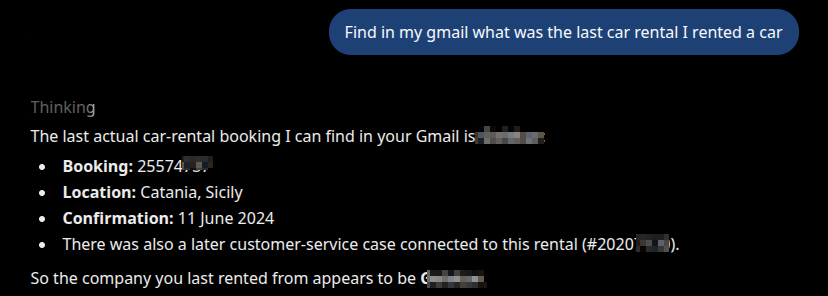
You know what? It's the wrong company. Not the one I took the car from.
Of course I started to search for details, I asked some more questions, I even tried to search by myself in the mailbox.
And finally I got the answer.
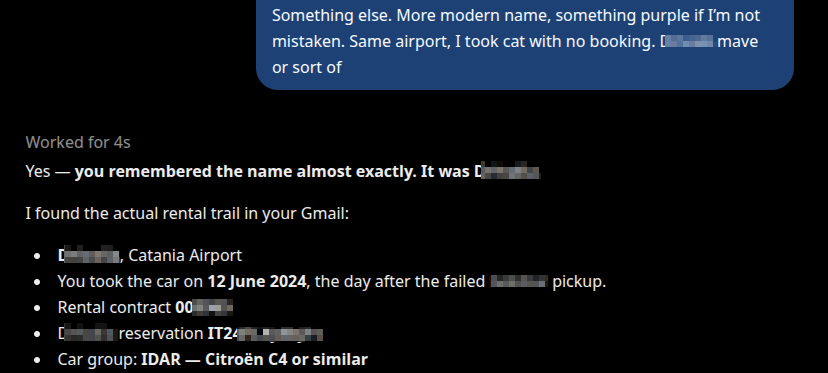
Between these 2 answers I got a lot of other wrong ones.
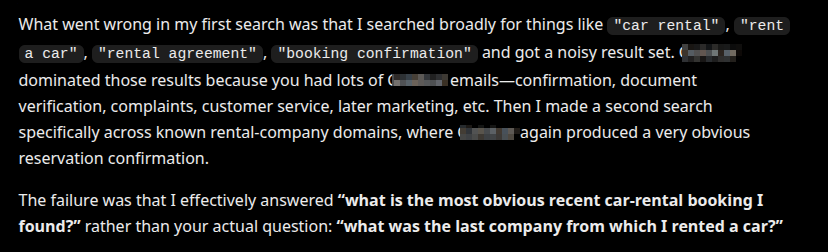
Now the question: what was the difference? Why did 2 companies send me the confirmation, but one was found fast and for the other one I needed to search?
Imagine the difference between them wouldn't be so big or I would have less time (most often I book or order something while driving with voice messages to ChatGPT or, if it's something more complicated, to my personal AI agent running on my server — surprise: it also failed without clues like “it has purple and blue in their design”).
Imagine you are my client. We do mail confirmations.
In 2024 I would tell you: structured content, accent colors, looks equally good on all screen sizes, not too heavy, non-intrusive upsells in the footer, clear CTA, proper branding.
Now I don't think it matters nearly as much.
Of course, we would keep the standards. We would not start to make it ugly.
But here is another insight: a decade ago we did most interfaces for desktops. Now, for many businesses, something around 80% of customers can be mobile. In 2027 I think half of your customers will not visit your website.
Hey, I'm booking the car, I know the dates, I know the place, I know the car category. I don't care about the design of your website or your brand book. Know why? I will maybe not even see it!
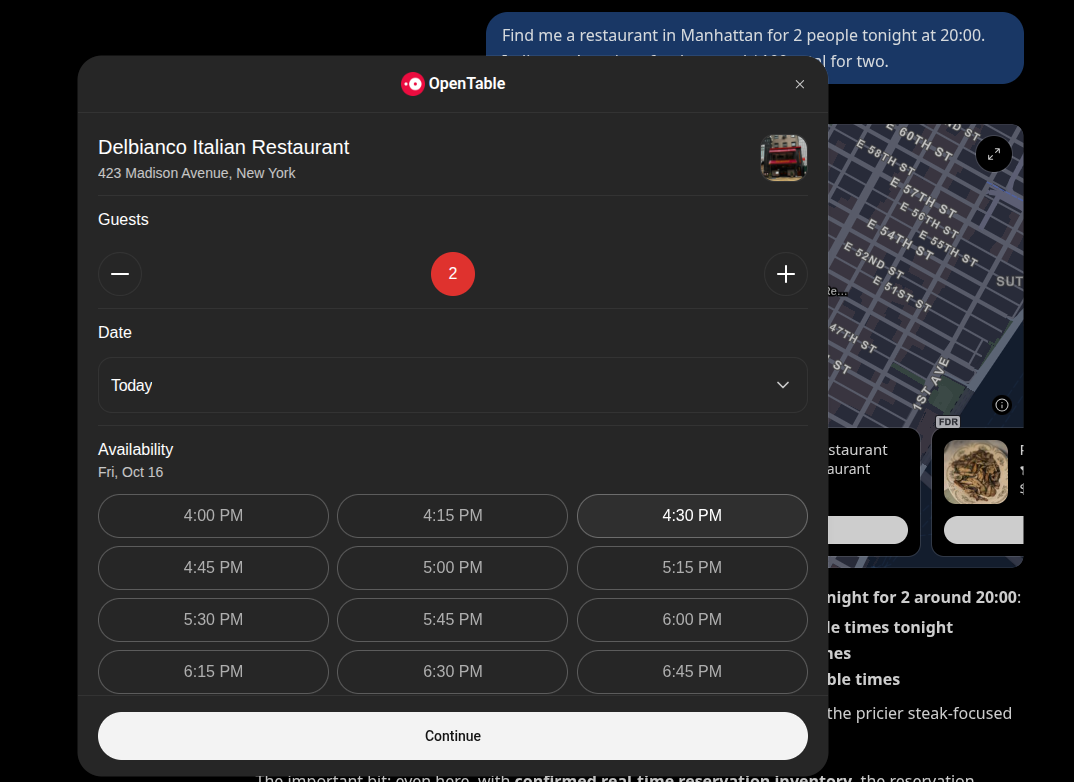
I will do it through my agent (most probably voice-controlled).
If I'm doing it for the first time, what matters to me is reviews and price (or price and reviews, ok?). If I already have good experience — man, don't lose your lead. I want to rent again from you, but please — invest in your email content. I want my agent to find you first.
GEO isn't hard today. Imagine SEO 15 years ago. You needed to put the correct H1/H2 tags into your HTML, add some meta tags, and that was already enough for Google to understand a lot about your page.
GEO today is in a similar stage. Your tags do not matter that much — the content does. The things an agent can catch, understand and use when deciding what is relevant — this is what matters.
And it is evolving really fast. Come on, prompt injections were a common thing just one year ago. Today agents are already much better at handling them. The rules are changing quickly, but right now GEO is still relatively simple.
So use this moment.